
Tutor activities in higher education institutions in Uzbekistan are organized in accordance with the Regulation approved by Resolution No. 656 of the Cabinet of Ministers dated October 17, 2025. This document defines the duties, rights and responsibilities of tutors, as well as the qualification requirements for the position.
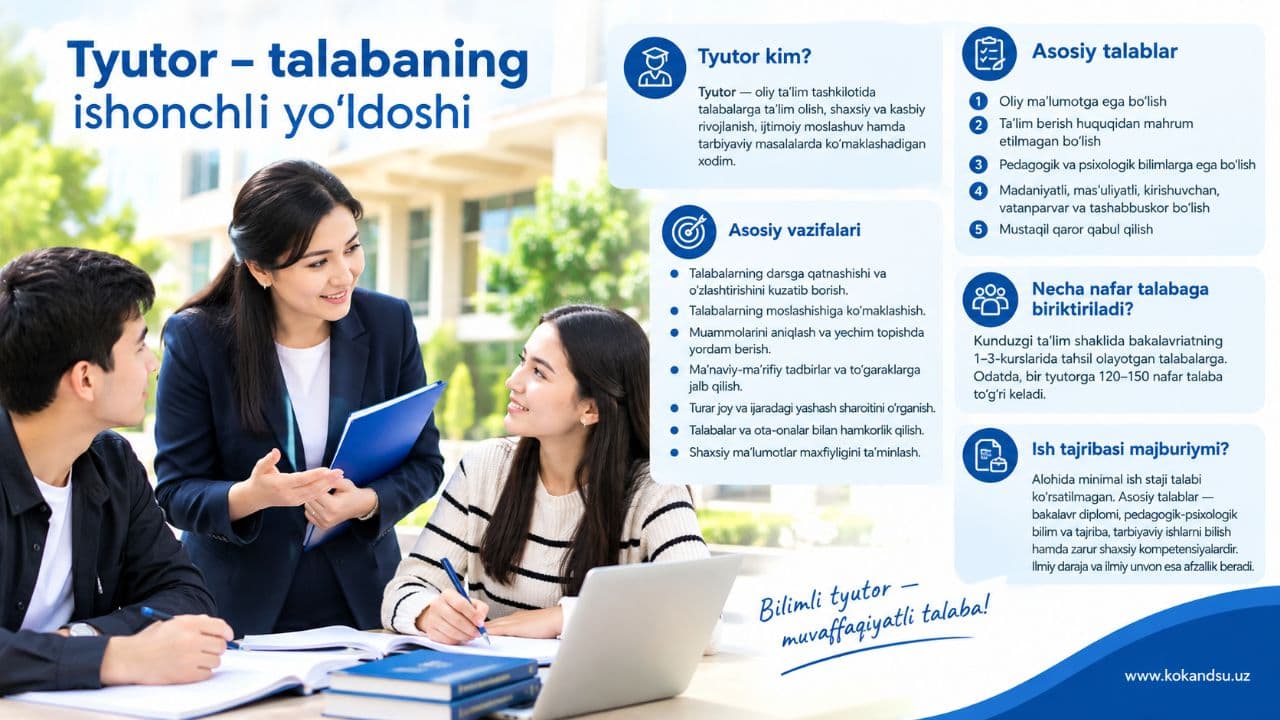
Who is a tutor?
A tutor is a staff member of a higher education institution who supports students in their studies, personal and professional development, social integration, and educational matters.
Tutors work individually with the students assigned to them, identify their problems, help them overcome academic difficulties, and encourage their active participation in university life.
What are the requirements for the position of a tutor?
In accordance with Resolution No. 656 of the Cabinet of Ministers, candidates for the position of tutor must meet the following key requirements:
1. Hold a higher education qualification.
2. Not have been deprived of the right to engage in teaching.
3. Possess knowledge of pedagogy and psychology.
4. Be well-mannered, responsible, communicative, patriotic, and proactive.
5. Be able to make independent decisions.
Main Responsibilities of a Tutor
- Monitor students’ class attendance and academic performance.
- Help students adapt to the university’s educational environment.
- Identify students’ problems and work with the relevant staff to resolve them.
- Encourage students to participate in spiritual and educational events, clubs, and other initiatives.
- Address issues related to students’ living conditions in university dormitories and rented accommodation.
- Cooperate with students and their parents.
- Respect students’ dignity and ensure the confidentiality of their personal data.
How Many Students Are Assigned to One Tutor?
According to Clause 12 of the Regulation, tutors are assigned undergraduate students in their first, second, and third years of full-time study. Generally, one tutor is responsible for 120–150 students.
Is Work Experience Mandatory?
Clause 17 of the Regulation does not specify a separate minimum work experience requirement for appointment to the position of tutor. The key requirements include a bachelor’s degree, pedagogical and psychological knowledge and experience, an understanding of educational and mentoring activities, and the necessary personal competencies. An academic degree and academic title are considered an advantage.
Related news
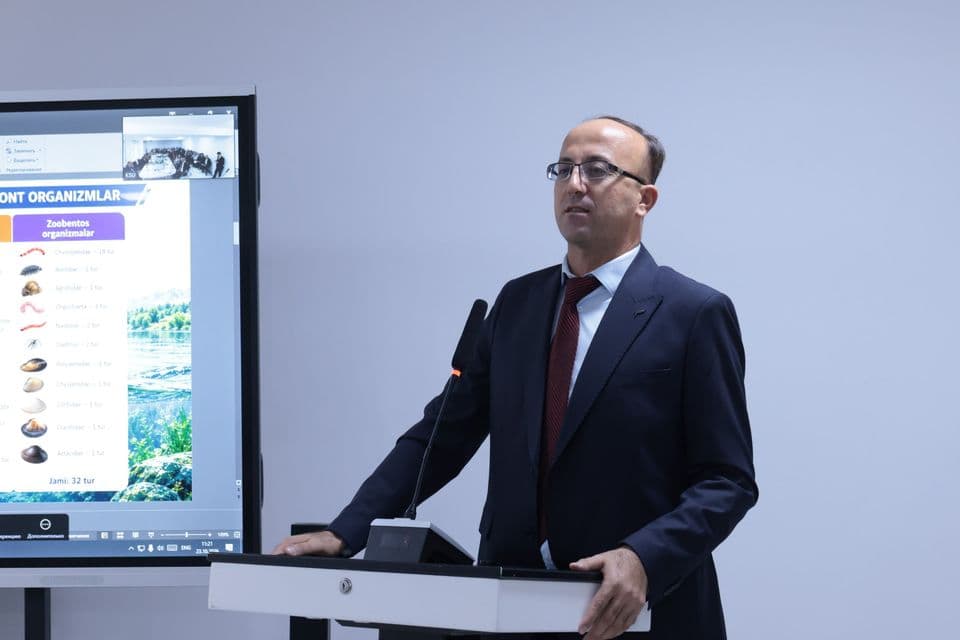
“Green Space” — Towards Nature Conservation and the Promotion of Environmental Awareness
An international scientific and practical conference entitled “Green Space: Protecting Flora and Fauna and Teaching Respect for Nature in the Upbringing of the Younger Ge…
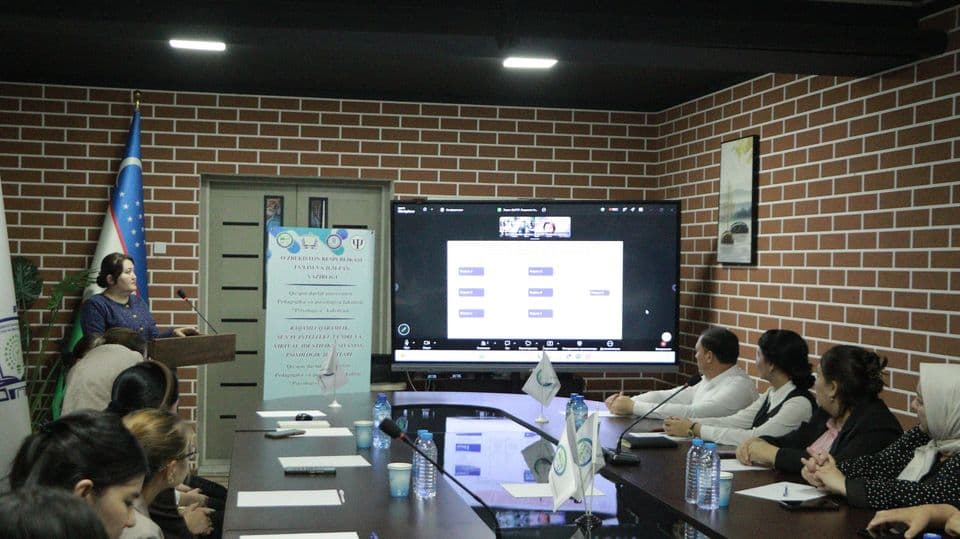
Digital Addiction and Artificial Intelligence: Conference Held on a Pressing Issue
Amid the rapid development of digital technologies in our country, an important scientific and practical conference was held to address pressing issues facing society. As…
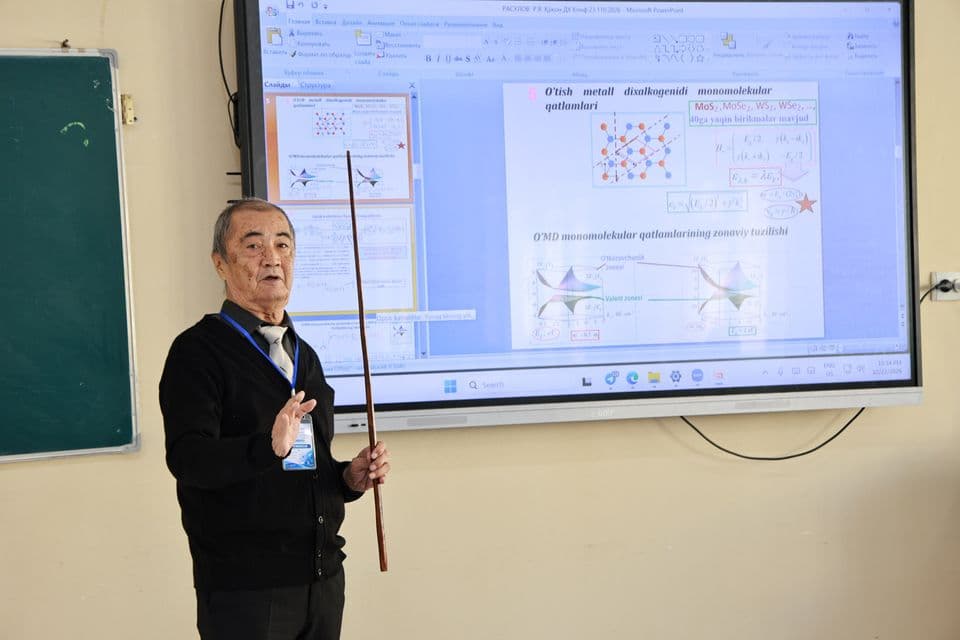
Modern Approaches to Physics and Astronomy Education Discussed
Strengthening the integration of science and education, promoting the practical application of fundamental research findings, and creating an effective platform for scien…